Impact Forces
Developing shoe designs to reduce chronic injuries in pole vault athletes. Starting with biomechanical research and force calculations, translating the data directly into product specifications.
Design Engineer & Kinesiologist
Sports Product Design, Biomechanics, Force Calculations, Kinesiology
Year: 2017 (3 weeks)

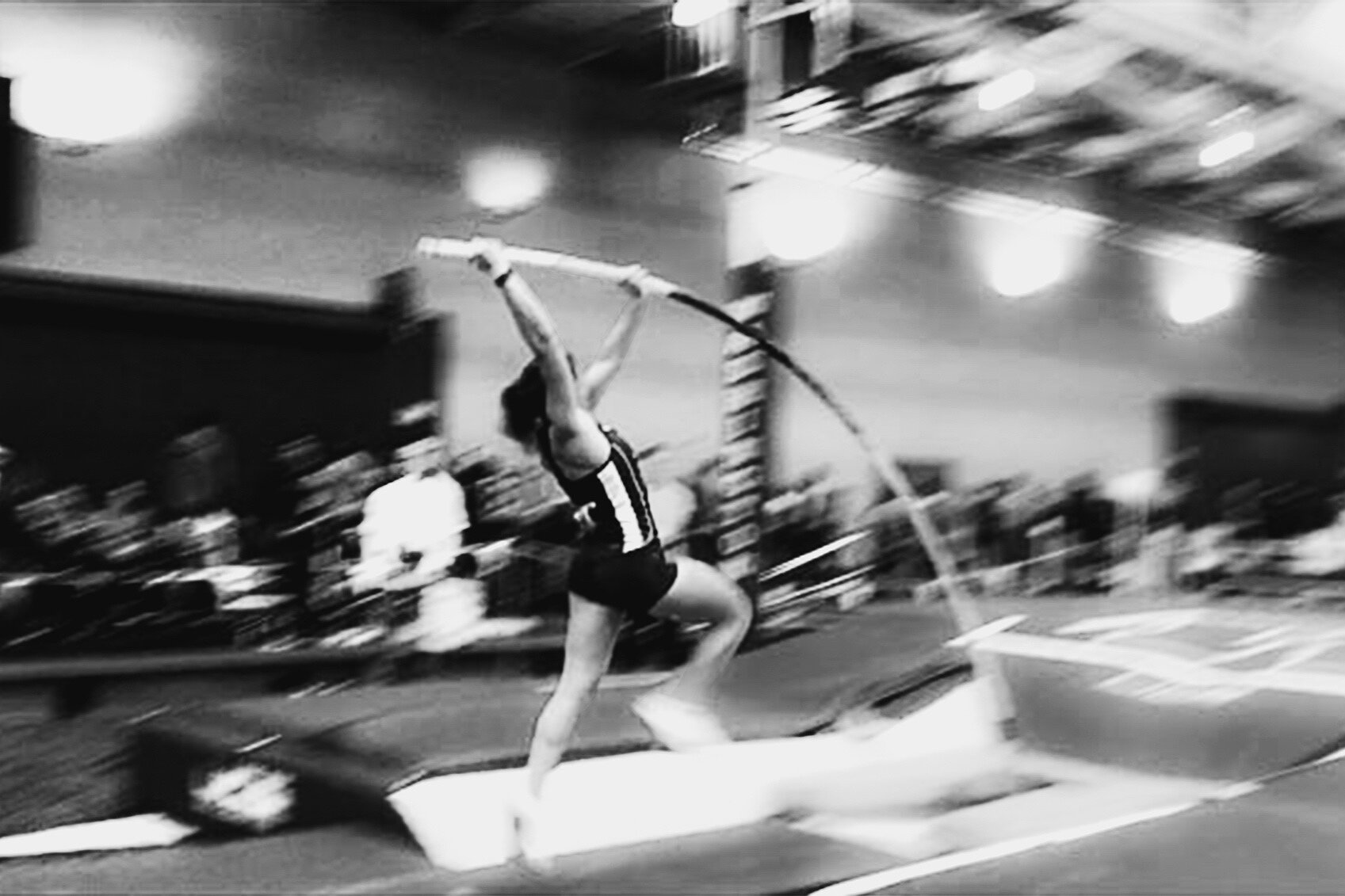
Pole vault athletes experience repetitive impact forces which can be damaging.
Impact forces, sustained over years, cause chronic breakdown of muscles and bones. The most common resulting injuries are shin splints, patellar knee tendinitis, and stress fractures.
Research - Kinematics & Kinetics

Gate Patterns
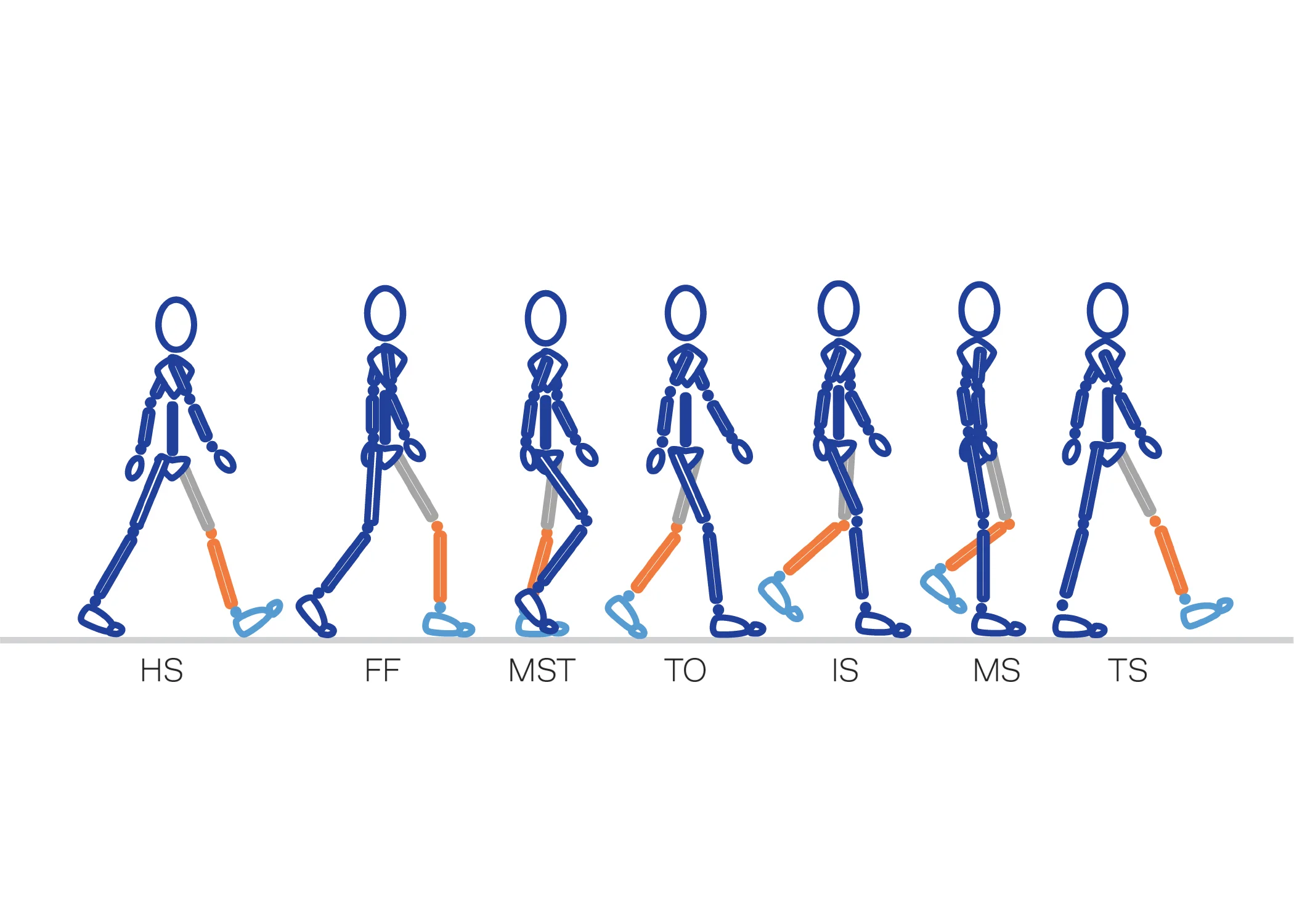
Research began by mapping the full gait cycle and the muscles involved at each phase: Heel Strike, Foot Flat, Mid Stance, Toe Off, Initial Swing, Mid Swing, and Terminal Swing. Video analysis was used to determine the velocities of each leg segment per phase, from which acceleration and force were calculated and the muscles under greatest stress identified.
The majority of force absorption occurs during terminal swing and heel strike, where the body rapidly decelerates. Shin splints and distal knee tendinitis result from overstraining of muscles during these phases. Stress fractures occur from repeated high impact at takeoff. These two distinct injury mechanisms called for two distinct design responses.

Acceleration & Force
With the knowledge, muscles under the greatest stress were identified.
The majority of force absorption occurs in the terminal swing and heel strike. Reducing force in these phases could help prevent injuries.
Impact is highest at take off, or the heel strike - toe off phase. .
Insights

Making
Several heel geometries were explored from the perspective of force transfer, testing how shape affects torque and load distribution through vulnerable muscle groups.

Final Concept
A redesigned heel shape to limit torque and reduce overstraining of vulnerable muscle groups, addressing shin splints and knee tendinitis.
Padding and arch support positioned to respond to the high impact forces of takeoff, reducing the risk of stress fractures.