Impact Forces
Developing shoe designs to reduce chronic injuries in pole vault athletes.
Design Engineer & Kinesiologist
Sports Product Design, Biomechanics, Force Calculations, Kinesiology
Year: 2017 (3 weeks)

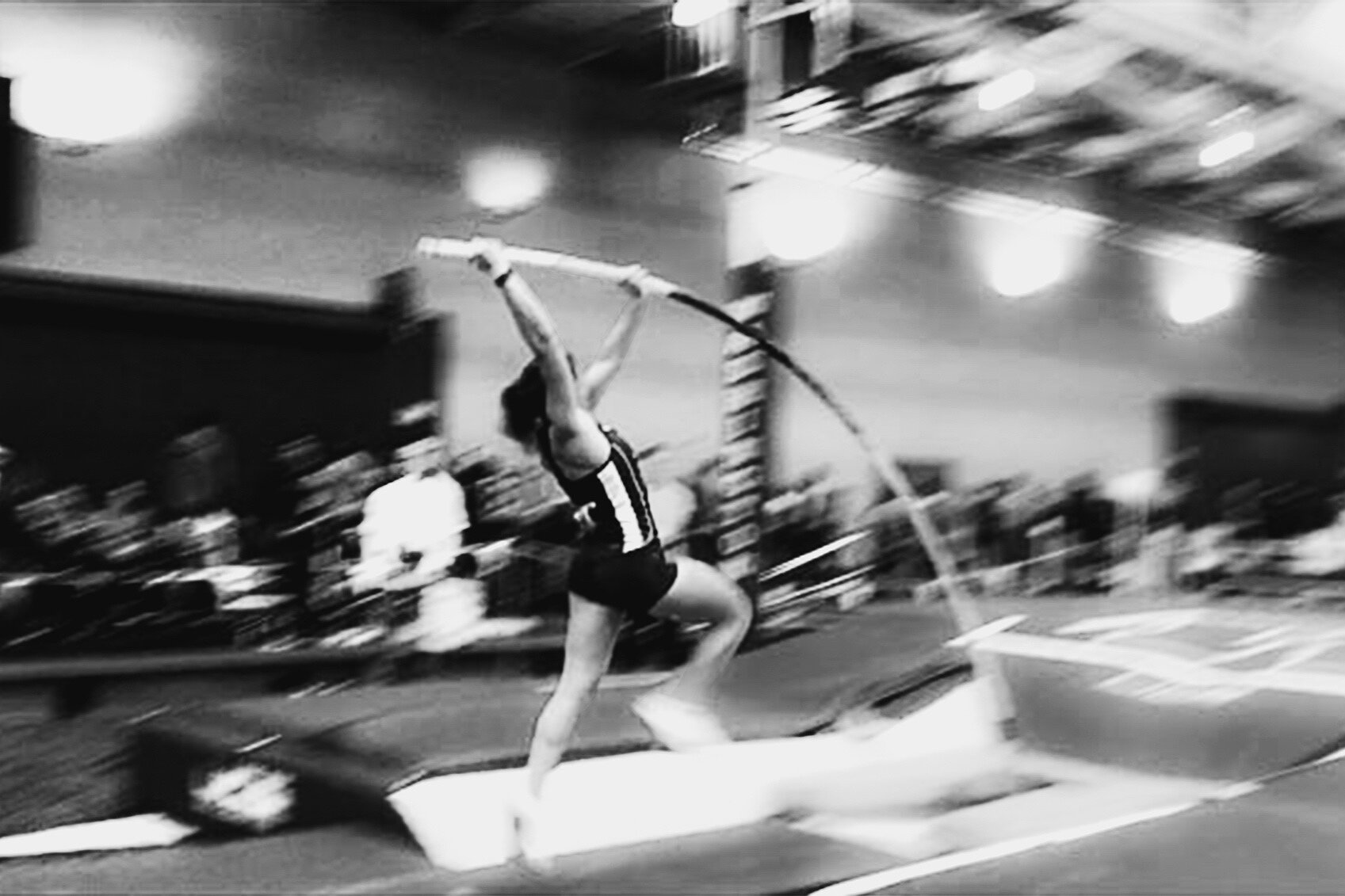
Pole vault athletes experience repetitive impact forces which can be damaging.
Sustaining these repetitive strains over years cause the body, even bones, to start breaking down. This break down is commonly known as chronic injuries. In pole vaulting the most common chronic injuries are; shin splints, patella knee tendinitis, and stress fractures.
Research - Kinematics & Kinetics

Gate Patterns
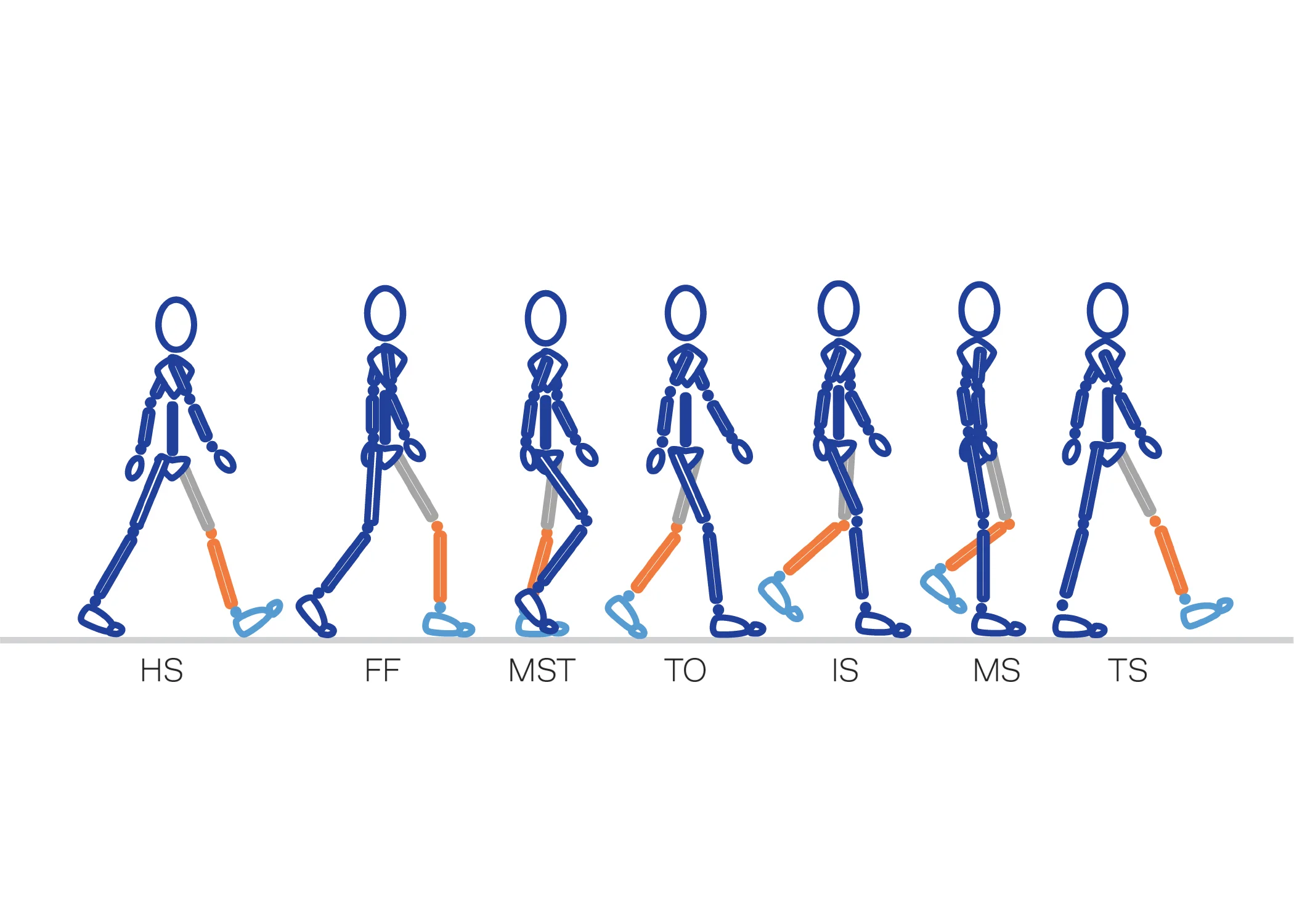
Research began by mapping out the phases of walking and the muscles involved in each phase. These phases are illustrated and labeled on the figures below and include: Heel Strike (HS), Foot Flat (FF), Mid Stance (MST), Toe Off (TO), Initial Swing (IS), Mid Swing (MS), and Terminal Swing (TS).
Using video analysis the velocities of each section of the leg per phase were determined. That data is illustrated on the graph and corresponds to the walking phase and leg section of the figures.

Acceleration & Force
Once the velocities and times were known the acceleration was calculated and muscles under the greatest stress identified.
The majority of force absorption occurs in the terminal swing and heel strike. This is from controlling rapid deceleration. Shin splints and distal knee tendinitis are typically caused by an overstraining of the muscles. Reducing force in these phases will could help prevent these injuries.
Stress Fractures occur from repeated high impact. Impact is highest at take off, or the heel strike - toe off phase. Padding will reduce the risk of fractures.
Insights

Making
Several forms were explored from the perspective of force transfer in the shape of the heel. Secondly, padding and arch support were included to limit initial shock absorption.

Final Concept
01 Redesigned heel shape for limited torque and overstrains of venerable muscle groups. Addressing shin splints and knee tendinitis.
02 Padding and arch support respond to the high impact forces of take off and assist in reducing the risk of stress fractures.